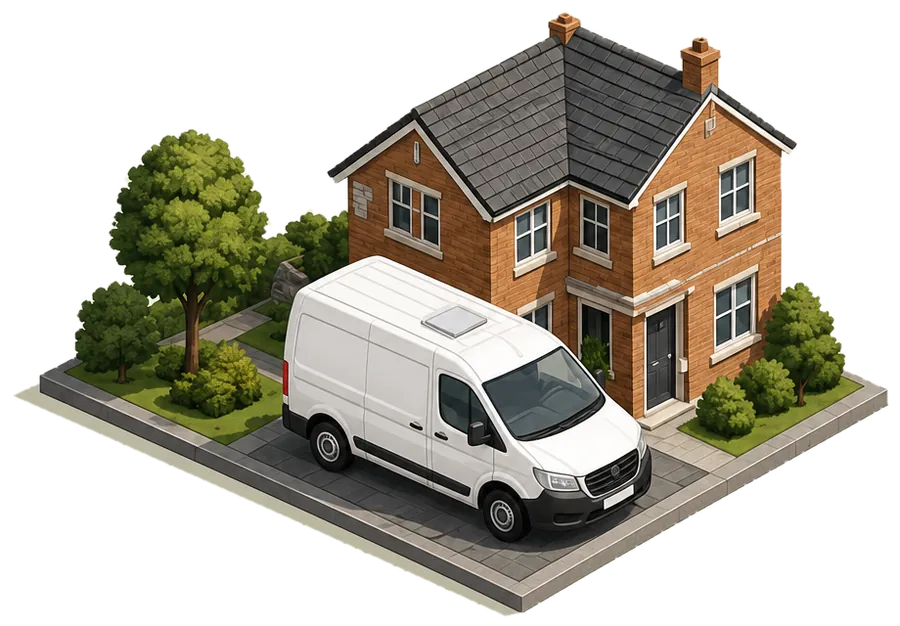
VELUX Windows in Milton Keynes
VELUX roof windows fitted and replaced in Milton Keynes homes, flashed to the tiles and finished inside, with the Building Control notification handled where it applies.
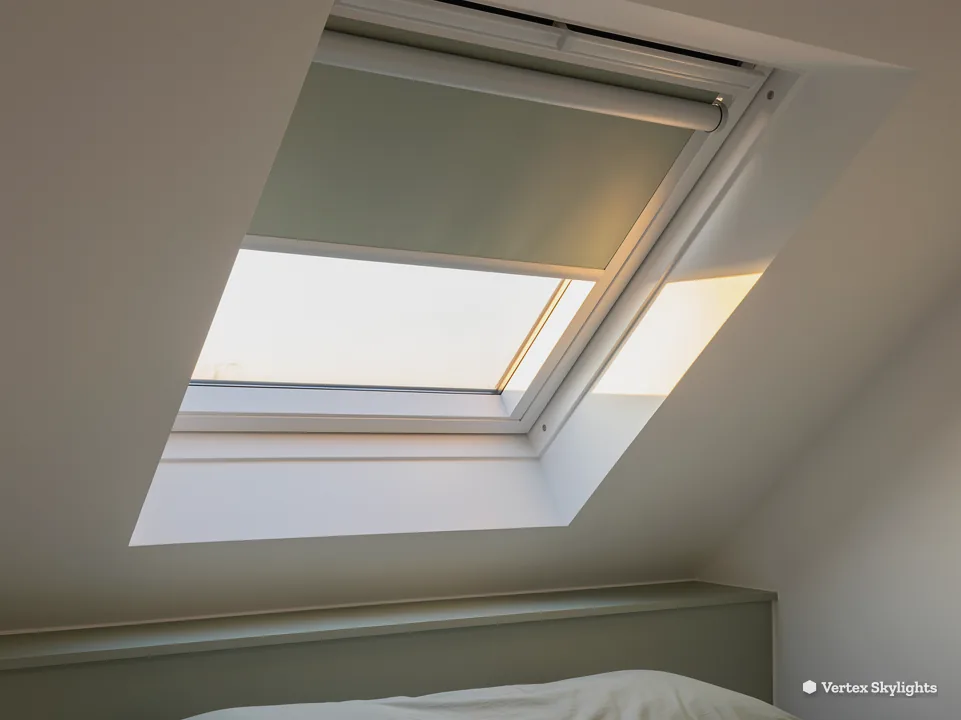
Where a VELUX window earns its place
A pitched roof can carry a window in its slope. These are the rooms where that position makes the biggest difference.
-
Loft bedrooms
No wall exists on the slope to take a window, so the window goes into the roof and the bed gets the sky.
-
Landings and stairwells
The dark middle of a house, where a window in the roof pulls daylight down the stairs.
-
Top-floor bathrooms
A room with no outside wall to spare, where an opening window overhead clears steam and keeps the light private.

Built to last
- We survey before we price
- Your written quote does not change on the day
- Building Control notification handled
- 10 years on our workmanship, in writing
VELUX windows, start to finish
Fitting and replacing VELUX windows in Milton Keynes homes
A VELUX window is the roof window a homeowner pictures when they say skylight. Here is what it solves, how an old one is swapped, what the fitting involves and what the rules say.
The loft room is dim and boxed in
Where the walls lean in, the sky is the one place light can come from.
Sideways
A room under a pitched roof has a problem that ground-floor rooms do not. The walls slope in, the ceiling follows them, and the only upright wall is the gable end, if the house has one. A small gable window lights one end of the room and leaves the rest waiting for a lamp.
A window in the side of a house faces fences, walls, neighbours and trees. Up in the roof, the angle is steeper, but the principle holds: whatever is at the side blocks the light long before it reaches the bed or the desk.
The effect shows in how the room gets used. A loft bedroom with one small window is a room you sleep in and leave. A loft office with poor light is a room where the desk lamp is on at noon. The space is there, but it never feels finished until the light is sorted.
Straight up
A VELUX window is a roof window: a glazed frame set into the slope of the roof, in the same plane as the tiles. It looks straight up. Straight up is clear, because there is nothing between a roof window and the open sky, so natural light reaches the middle of the floor instead of stopping at the edge.
The same window gives you a view of clouds and treetops from the pillow, and, because it opens, ventilation for a room that holds warm air at the top of the house.
Position matters as much as the window itself. Set high in the slope, a roof window lights the back of the room and shows the sky overhead. One set lower gives a view out as well as up, which suits a room where you stand at the window. At the survey we mark the positions with you, which shows where the light will land before anything is cut.
VELUX is a manufacturer with a wide range: top-hung and centre-pivot windows, fixed windows, escape-rated windows, windows for low-pitch roofs and windows that open and close by remote. The right choice depends on the room, the pitch and how high the window sits in the slope. We cover the choices at the survey, and our guide to roof windows sets out the wider family if you are comparing styles.
The word you will hear from trades is rooflight. The word a homeowner reaches for is skylight. For a window in a pitched roof they mean the same thing, and both lead to the same survey.
The range runs across several kinds of opening, and it helps to know the names. A centre-pivot window turns about the middle of the sash, so you can clean the outer pane from inside. A top-hung window swings out from the top edge and gives more headroom at the sill. A fixed window does not open and suits a spot you want to light but not air. Roof windows made for residential homes come in white painted or natural finishes, and the inside of the frame can be pine or white polyurethane. Which one suits depends on the room: a bathroom wants a finish that shrugs off steam, while a bedroom can take bare pine.
There are also accessories sold for the range: blinds, awnings, insect screens and shutters. These are chosen with the window, so the fittings suit the frame from the first day.
Roof windows and rooflights come from several makers, and VELUX, FAKRO and Keylite are well-known brands of roof window. The brand and size code on your current window matter, because they decide which units can take its place, so we read them at the survey.
Replacing an old window whose glass unit has failed
A window that has done its job for a long time can start telling you it has finished.
Sideways
Roof windows live a harder life than wall windows. They take the full weight of rain, a hot afternoon and frost, all facing upward. Eventually the signs show. Condensation appears between the panes and will not wipe away. The glass looks misted or milky. Draughts creep round the sash. The frame is discoloured, brittle or cracking at the corners, or the window no longer closes cleanly.
Misting between the panes means the sealed unit has failed. The seal that held the gas between the glass has broken, damp air has got in, and no amount of cleaning will clear it. Meanwhile the room loses warmth through a window that no longer insulates.
The frame has its own life. The finish on a timber frame ages in sun and rain, and a white painted frame can yellow. A seal round the sash hardens, and a window that once closed softly starts to rattle in wind. Little by little a room under the roof becomes the room nobody wants to be in.
Straight up
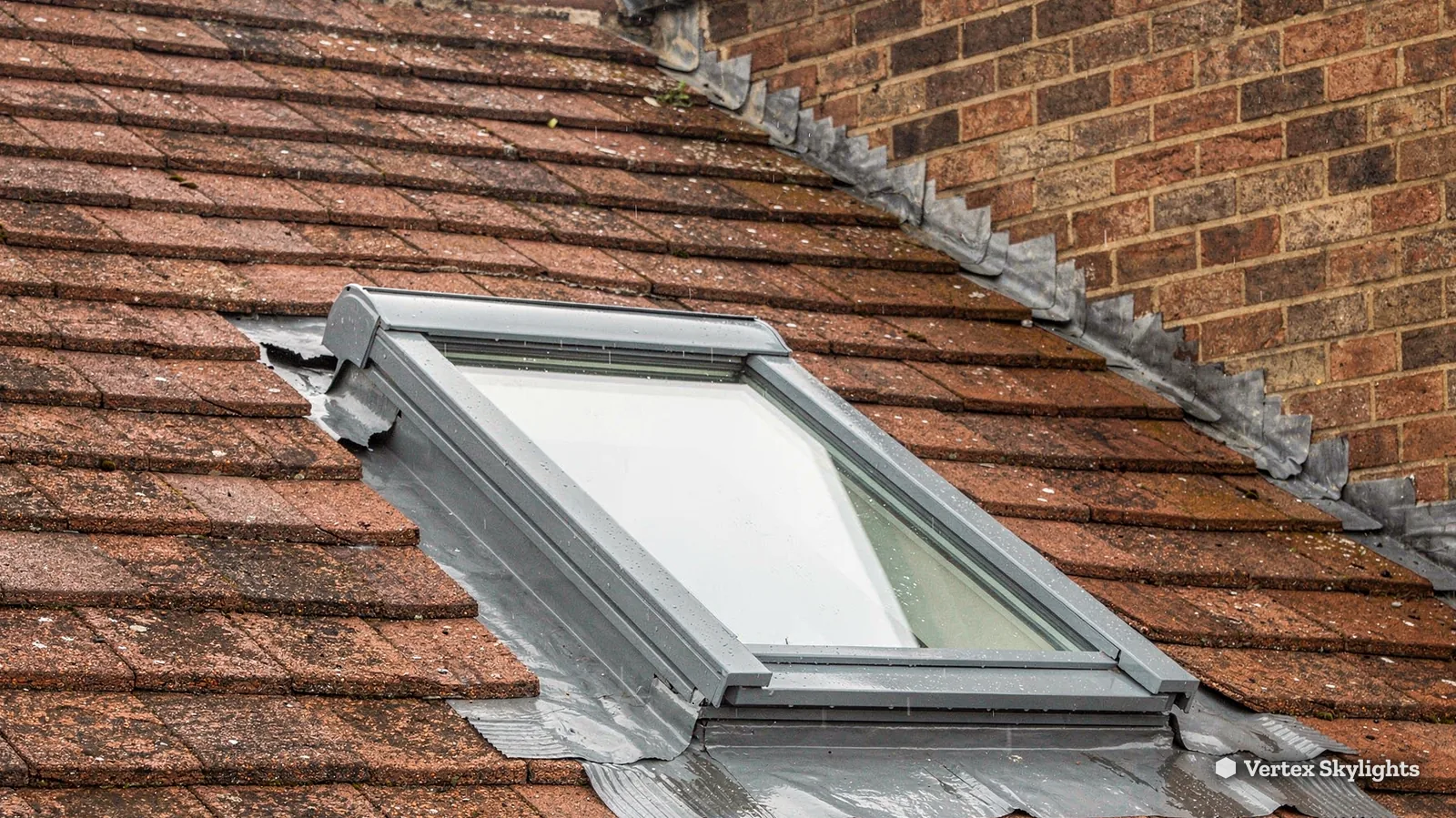
Replacing the window is the clean answer. A replacement VELUX window takes the place of the old one in the same opening. The old sash and frame come out, the new unit goes in, and the flashing that joins the window to the tiles is renewed so that rain runs over it and not under it.
The new window brings modern double glazing with it, which is better at holding heat than the glass it replaces. A bright room that was cold at the top of the stairs becomes a room you can use again.
The saving is not only in warmth. A window that opens and closes properly brings back ventilation, and a bedroom that was stuffy gets air again. Fresh glass also lets more daylight through than a clouded unit, so the room looks brighter on a grey day.
Signs it is time to replace
- Is there condensation or a milky haze between the panes?
- Does cold air reach you near the sash on a windy day?
- Has the frame faded, cracked or turned brittle?
- Does the window stick, or stay open a crack?
- Has water marked the plaster round the opening?
Our answer on when a VELUX window should be replaced lists the signs in order, if you are unsure whether yours has reached that point. Where the only problem is a cloudy double-glazed unit, our page on misted rooflights explains how failed units are handled and when a whole new window makes better sense than a new pane.
Bring the details you have to the survey: the size of the window, the number on its label if you can reach it, and what you want it to do better. We take it from there. For a full account of the swap itself, read replacing a VELUX window, like for like or upgrade.
It helps to know what you are choosing between. You can keep the frame and replace only the glass, you can swap the whole window for the same model, or you can step up to a different model in the same hole. We look at the frame, the flashing and the state of the plaster before we say which suits. A sound frame with failed glass may need nothing more than a new sealed unit. Where the frame is cracked, the flashing is worn or the window is old enough that matching parts are hard to find, a full replacement is the sensible answer, and the money is better spent on a window that will last.
Blown units are not a reason to put the job off. A window with failed glass keeps losing heat and keeps letting damp air collect inside the sash. The longer the window stays as it is, the more the frame and the plaster round it are exposed.
A bigger window needs a bigger hole
A swap in the same hole is one job. Cutting the roof larger is another.
Sideways
Sometimes the window is the right type but the wrong size. It was fitted when the room was a store, and now the room is a bedroom or a home office and the window is a letterbox. Or you want two windows side by side to light a long slope. Either way the existing opening cannot take what you want.
A bigger window means a bigger opening in the roof. That is structural work. It touches the rafters, the battens and the tile courses around the window, and it needs doing with care so that the roof stays sound and the ceiling inside stays straight.
Size matters for a practical reason. A small window in a big room leaves dark corners. A tall window in a low slope looks out at the roof ridge. The size you need follows the room, the pitch and the spacing of the rafters, not only the look you want.
Straight up
We plan a larger or new opening at the survey. The rafters that are cut get trimmed with new timbers, the opening is framed square, and the window is fitted with a flashing kit made for its size and for the roof covering: plain tiles, interlocking tiles or slate. The size code on a VELUX window tells you its width and height, which is how a new window is matched to the space.
Where the roof pitch is low, a different window type, or a different position on the slope, suits better. We check the pitch on the day of the survey and tell you what the roof will take.
Where the opening stays the same, the job is a swap. Where it changes, we show you the new size against the rafters on the survey and give the change in the written quote. Nothing is added on the day.
| Job | What changes | Best when | Know |
|---|---|---|---|
| Like-for-like swap | New window, same opening | The size already suits | Quickest route |
| Upgrade swap | New type, same opening | You want electric or better glass | Check the size code |
| Larger opening | Rafters trimmed, new frame | The room needs more light | Roof is cut and reframed |
| New window | A fresh opening in the slope | The room has no roof window | Survey checks pitch |
Our guide to VELUX size codes explains the letters and digits. The width is the letter and the height is the digits, so a window labelled MK04 is a particular pair of measurements, and a larger code is a larger window. The steps for making a window bigger are in our answer on whether a VELUX window can be made bigger.
If your ceiling is sloped, that is the normal case, not a problem. The window sits in the slope, and a plastered light well carries the daylight from the roof opening to the room. The well is lined, insulated and finished, so the room looks designed, not patched.
The flashing deserves a note of its own. It is the part of the job you never see once it is done, and the part that keeps the roof dry for years. A flashing kit is made for a window of a given size and for a given roof covering. A kit for interlocking tiles is cut differently from one for slate, and one for plain tiles sits differently again. Fitted correctly, it lets rain run down the tiles, over the kit and away. Fitted badly, it lets rain in at the corners. We fit the kit that matches the window and the roof, and we dress it to the tile courses by hand.
The measure is the first step. We take the dimensions of the existing frame, the pitch of the roof, the distance between rafters and the position of the window in the slope. Those figures decide the window code, the flashing kit and the framing, and they go into the quote.
How the installation works, step by step
The fear is rain, mess and a job that drifts. A plan removes most of that fear.
Sideways
Cutting into a roof worries people for good reason. A roof exists to keep the weather out, and a window job puts a gap in it, even if only for a short time. There is also the mess inside: dust from the old ceiling, loose plaster and a floor that needs covering.
Then there is the time. A job that has no start and end date seems to fill a fortnight, with trades turning up and leaving again. People want to know how long the window installation will take before they say yes.
Rain on the day is a reasonable worry. A roof that is open to the sky can take on water fast. Ask the question before you book, not after the first tile is lifted.
Straight up
The answer is a plan that you see before work starts. After the free survey you get a fixed written quote that does not change on the day, and the plan for the day with it. The roof is opened only as far as the window needs. The new unit goes in, the flashings are dressed to the tiles and the window is made weatherproof and watertight before we pack up. The inside is lined and plastered to a clean reveal, so there is no gap and no rough edge.
Fitting itself is a one or two day job for a single rooflight. Floors and furniture are covered first and the debris leaves with us.
The order of work is set so the roof is closed again quickly. The tiles round the opening are lifted, the new window is set in its frame, the flashing is dressed in, and the tiles go back. Only then does the inside get its lining and plaster. If the weather turns, the work waits for a dry spell, not the other way round.
Words you will hear on site
Flashing
The metal or lead sheet that joins the window frame to the tiles and sends rain over the joint.
Sealed unit
The pair of glass panes with gas between them, sealed at the edge.
Pitch
How steep the roof slope is, measured as an angle from the horizontal.
Size code
The letters and digits on a VELUX label that give the window's width and height.
Light well
The lined shaft from the roof opening down through the ceiling into the room.
Rafter
One of the timbers running up the slope beneath the roof covering, which limit the opening.
For the detail of timing, our answer on how long a VELUX installation takes walks through the stages. If you need to know what happens after the window is in, the work is tidy, the room is finished and our written guarantee on the workmanship, which runs for ten years, covers what we did.
We also handle the paperwork. Installation follows the current Building Regulations, and for notifiable work we do the Building Control reporting ourselves. You are not left chasing a certificate.
If you want to know whether you need to ask the council first, read the Milton Keynes planning guide before you book.
Inside, the finish is part of the job. The light well is boarded, insulated and plastered, the corners are neat and the surface is ready to paint. Dust sheets go down before work starts, and the room is left clean. Want a blind as part of the job? Mention it at the survey so the right model is ordered with the window.
Aftercare is simple. Wipe the glass, keep the vent open now and then and check the seals twice a year. If anything looks wrong in the first years, the ten-year guarantee on our workmanship is in writing, and a message to us on WhatsApp starts the process.
The room gets hot, cold or damp
The window that lights the room can also change how it feels. Get the details right.
Sideways
A window looking at the sky lets in a great deal of light, and with the light comes warmth in the summer and a chill in winter. A bedroom under a south-facing slope can feel like a greenhouse by mid-afternoon. A bathroom under the roof can fill with steam and have nowhere to send it.
Old roof windows add to the problem. Their glass is thinner, their seals have aged and the room under them swings in temperature. People ask whether replacement windows can improve energy efficiency, and the answer starts with the glass.
Steam and condensation are linked. Warm, damp air rises, meets cold glass and turns back to water. An old window with weak seals and thin glass collects it faster than a new one. The sill stays wet, the paint lifts and the room feels stale.
Straight up
A new roof window comes with double glazing or triple glazing and a low-emissivity coating, which holds warmth in and keeps heat out. You can choose between clear glass, tinted glass and glass with a solar-control coating, and between laminated and toughened inner panes. We talk through the options for the way your slope faces.
For comfort, fit a blind. Blinds sold for VELUX windows are made to the size code, so they fit the frame. Blackout blinds suit a bedroom, pleated blinds suit a landing, and a roller blind that runs in side channels suits a bathroom. If the window sits out of reach, an electric or solar-powered model opens and closes by remote, and a rain sensor shuts it when a shower starts.
A window that opens at the top lets damp air out where it collects. A trickle vent in the frame gives a small flow of fresh air even when the sash is closed. Both help a bathroom or a bedroom where air stands still.
The energy figures behind a new roof window
- 1.4 W/m²K
- ceiling for a new roof window under Part L (Table 4.2), or window energy rating band B
- 2.2 W/m²K
- limit for a flat rooflight in a home that already stands (Part L, Table 4.2)
On the rules: for existing homes, Part L of the Building Regulations sets the limit for the whole window, in Approved Document L, Table 4.2. To comply, a roof window needs a U-value of 1.4 W/m²K, or else a rating of band B under the Window Energy Rating scheme. A new rooflight on a flat roof has a different limit. The figures are set out above, and our page on energy-efficient rooflights explains how they play out in a house.
If you want an electric window, our page on electric opening rooflights covers how they are wired and operated.
Glass and frame materials
Choosing glass options is a genuine decision. A clear pane gives the most daylight. A tinted pane cuts glare. A solar-control coating cuts heat on a south-facing slope. Laminated glass holds together if it breaks, and a toughened outer pane takes hail and branches. We match the glass to the room, the way the roof faces and the budget in your quote, and tell you why.
Electric operation changes how a window feels to live with. A window in a high stair void, out of reach, becomes one you can open from the landing. A remote can open a whole row of windows together on a warm day. Rain sensors close them before a shower soaks the room. We take you through wiring, power and controls at the survey.
Is it allowed, and could it save a life
Permission, regulations and fire safety all come before the first tile is lifted.
Sideways
People ask three questions before they book. Do I need planning permission? Do I need Building Control? And can the window double as a way out in a fire? The answers depend on the house and the room, and the wrong guess can cost a lot to undo.
Homeowners want a straight statement. The trouble is that roofs differ, streets differ and some are covered by special rules.
The cost of a wrong guess is a window that has to come out again, or a room that fails a later check when the house is sold. Both are avoidable with a short check up front.
Straight up
On planning, a roof window in an ordinary house can sit within permitted development, though flats, listed buildings and streets under an Article 4 direction follow other rules. Sitting in a conservation area leaves permitted development in place; only an Article 4 direction takes it away. The council's planning team can tell you whether your street falls inside a conservation area. Our Milton Keynes planning guide explains where to check and links the council's own pages.
On escape, a window counts as a way out only for a storey within 4.5 metres of the ground, counted up to that storey's floor. A two-storey house needs a protected stair for a loft conversion, and a roof window is no substitute. A VELUX escape window is for the lower case, such as a first-floor room in a bungalow with a loft room.
We check the facts at the survey: which storey the room is on, how high the sill is from the floor and whether the street has special rules. You get the answer before the quote is fixed.
Verdict: for a room under a pitched roof, a properly flashed roof window with good glass is the simplest way to put open sky overhead, and the survey is where the details get settled.
On Building Regulations, a registered building control approver or the council can sign off the work. Notifiable work goes to the right body through us, and the window is installed to current Building Regulations. English Building Regulations set no daylight standard for a house, so a window is a choice about comfort and not a legal minimum.
Areas we cover around Milton Keynes
We install and replace VELUX windows in homes across Milton Keynes and the surrounding towns, from Newport Pagnell and Olney to Buckingham and Leighton Buzzard. Small commercial jobs are welcome too. If you want a lantern or a flat pane on a flatter roof, read about roof lanterns or flat roof rooflights. For a shaft of light in a room with no roof space, look at sun tunnels.
Every window we fit comes with our written guarantee, ten years on the workmanship. The survey is free, and you get a fixed written quote that does not change on the day. To start, use the quote form.
If you are comparing options for a room with a flat roof or no roof space at all, the choice is different. A pitched roof takes a window in the slope. On a flat extension, choose between a lantern and a flat rooflight. A hallway with no roof above it takes a sun tunnel. Where your house has more than one kind of roof, we can quote for each in a single visit, and the written quote lists them separately.
The survey is free and comes with no obligation. Name the room, add a photo of the roof if you have one, and a time gets booked. Everything is in writing before work starts, from the size of the window to the finish on the inside.
VELUX window questions, answered plainly
Do you provide VELUX window replacement in Milton Keynes?
Yes. We install and replace VELUX windows in homes across Milton Keynes and the towns around it. You get a free survey, a fixed written quote and ten years of written cover on our workmanship. Our guide to replacing a VELUX window shows what the job involves.
The survey covers the pitch, the covering, the frame and the finish inside, so the quote names every part of the job.
Can you install a VELUX in any roof?
A pitched roof can take one, but the covering, the pitch and the rafters decide what suits. We check all three at the survey and say what the roof will take. A low pitch needs a different window from a steep one, and a very flat roof needs a flat rooflight instead.
A window that does not suit the pitch can leak or run cold, so the check is not skipped. The pitch is measured, not guessed.
Do I need planning permission for a VELUX?
It may not be needed, but it depends on the house, the street and the roof. Our Milton Keynes planning guide explains where to check, and a call to the council's planning team settles your own street.
If a conservation area or Article 4 direction might apply, a call to the council's planning team settles it. We help you ask the right question.
Do you handle the plastering inside?
Yes. The light well is lined, insulated and plastered to a clean reveal, ready for paint. The floor is covered before we start, and the job includes finishing the inside.
Free survey
Book your free survey
No obligation. We survey before we price.
Or WhatsApp 07880 284133